
Trump ACA Refund Checks: The $500 payment is a one-time Treasury check for people who bought 2026 coverage through HealthCare.gov, in one of 30 federal-exchange states, and received no premium tax credit (they paid full price). There is no application.
Checks are issued per person, and people on state-run exchanges or with subsidized plans are not on the list.
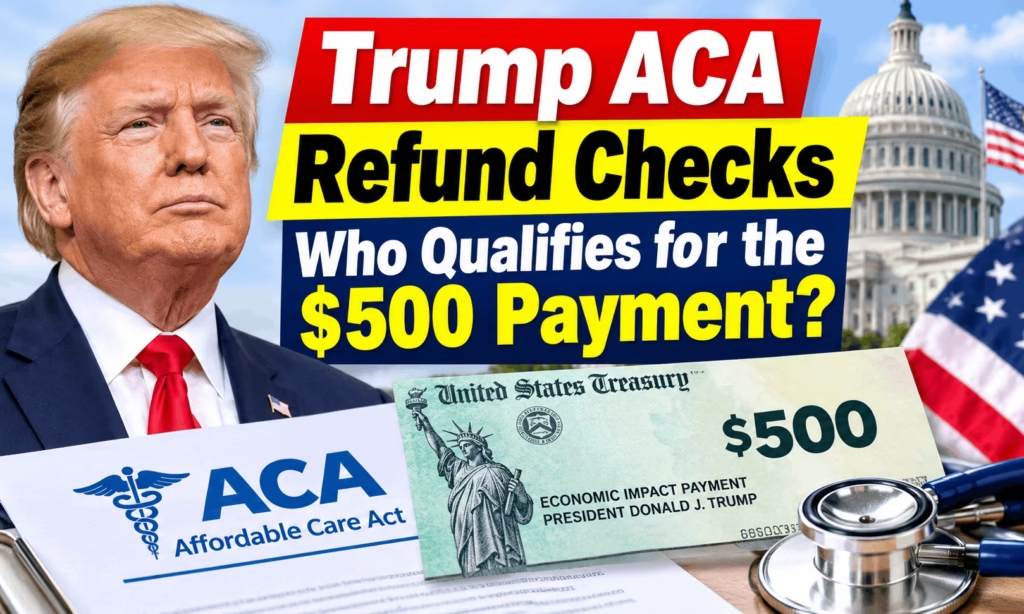
Trump ACA Refund Checks
On September 10, 2026, President Trump announced $500-per-person ACA Refund checks for nearly one million Americans with Affordable Care Act coverage. The administration calls the program the “Working Families Obamacare Refunds.” Its argument is that fees charged to insurers to run the federal marketplace were passed on to consumers as higher premiums and left a surplus, which the government is now returning. Searches for the payment surged, and so did scam attempts, because the program is narrow and widely misunderstood.
The most important point is that this is not $500 for everyone with ACA coverage. Most marketplace customers get a premium tax credit, and the program is aimed mainly at people who paid the full premium. The payment also depends on where you live and how you bought your plan. Whether you qualify comes down to three questions: did you enroll through HealthCare.gov, do you live in one of the 30 listed states, and did you receive premium assistance in 2026?
What the $500 Payment Is?
According to the fact sheet, the federal government is issuing ACA Refund of $500 per person to nearly 1 million Americans in 30 states. The administration says the money comes from a surplus of “user fees” that insurers pay the Centers for Medicare & Medicaid Services (CMS) to sell plans on the federal exchange. Those fees fund marketplace operations, and insurers can build them into premiums.
Some details matter for expectations:
- It is a flat amount. The $500 is not a calculation of what you personally overpaid. There is no indication the government worked out that each recipient overpaid by $500, and HealthCare.gov doesn’t charge consumers a separate user fee.
- It is paid per person. Families with more than one “affected person” may receive multiple $500 checks or direct deposits.
- It is one-time. The letter that comes with the check describes it that way.
- It is funded from fee surplus. The White House puts the cost at roughly $500 million, drawn from that surplus rather than new appropriations.
- It is separate from the proposed “$5,000 dividend.” That idea, discussed during the GOP midterm convention, is a proposal and not part of this program.
Who Qualifies?
The White House fact sheet says ACA Refund go to Americans who:
- Do not receive premium assistance under the ACA, and therefore paid the full cost of their premiums, and
- Live in one of the 30 states that use the federal exchange for their marketplaces.
Reporting adds that eligibility rests on 2026 coverage bought through HealthCare.gov. There is no application, because Treasury pays from existing records.
Administration officials have described who is most likely to get a check. An official told ABC News the primary recipients are people with incomes above 400% of the federal poverty level, while some people between 100% and 400% who did not receive subsidies are also included. The 2026 federal poverty level is $15,960 for one person in the 48 contiguous states and D.C. Because the enhanced subsidy rules ended after 2025, many people above 400% FPL now pay full price, which is a large part of the eligible group.
The 30 states
The fact sheet lists these states:
| Alabama | Indiana | Montana | South Carolina |
| Alaska | Iowa | Nebraska | South Dakota |
| Arizona | Kansas | New Hampshire | Tennessee |
| Arkansas | Louisiana | North Carolina | Texas |
| Delaware | Michigan | North Dakota | Utah |
| Florida | Mississippi | Ohio | West Virginia |
| Hawaii | Missouri | Oklahoma | Wisconsin |
| Oregon | Wyoming |
An official said Texas and Florida have the most recipients, followed by Wisconsin, Arizona and Oregon.
Who does not qualify?
| Situation | Likely result |
| Lives in one of the 20 other states with its own exchange | Not eligible. The administration says the federal government did not collect user fees there. |
| Received a premium tax credit for 2026 | Not eligible |
| Bought a plan directly from an insurer, outside HealthCare.gov | Appears not eligible, since the program targets HealthCare.gov enrollees |
| Has employer coverage, Medicare or Medicaid | Not part of the program |
| Paid full price for 2025 coverage only | Reporting indicates the program covers 2026 coverage |
How Many People and When?
| Date | Event |
| Sept. 10, 2026 | Program announced; fact sheet published |
| Sept. 30, 2026 | Treasury began issuing checks, according to an administration official |
| Nov. 1, 2026 | Open enrollment for 2027 coverage began |
| Mid-November 2026 | Reasonable time to follow up if you expected a check and have none |
| Dec. 15, 2026 | Reported deadline to pick a HealthCare.gov plan for a Jan. 1 start |
Over 950,000 Americans in 30 states are receiving payments, according to the administration. The White House originally said checks would begin in October, and they went out earlier than that. There is no published delivery date for individual recipients, and reporting says it is unclear how long delivery will take. Checks arrive by mail with a letter, so an out-of-date address can cause a problem.
What to Do Now?
If you think you qualify:
- Confirm your 2026 plan came through HealthCare.gov and that you received no premium tax credit.
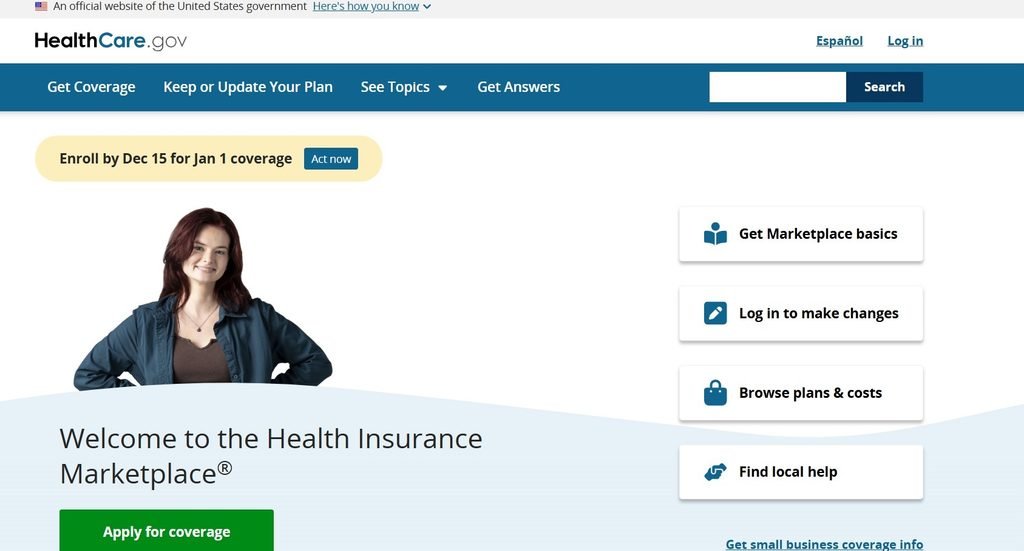
- Log in to your HealthCare.gov account and check that your mailing address is current.
- Wait for the mailed check. Nothing needs to be filed.
- If nothing has arrived and you expected a payment, contact HealthCare.gov (1-800-318-2596) or use its contact options.
- Keep the letter and the deposit record.
If you don’t qualify: The ACA Refund doesn’t change your 2026 premium, and it doesn’t affect 2027 prices. If you’re shopping for 2027 coverage, you can see on HealthCare.gov whether you qualify for savings. Free local help is available at localhelp.healthcare.gov.
Scams to Watch For
There is no application, no fee and no registration. Treat any text, email, call or ad that asks you to pay a fee, “register,” share your HealthCare.gov password or give banking details as a likely scam. Look up official phone numbers yourself rather than using ones in a message.
You can report suspected scams to the FTC at reportfraud.ftc.gov. For updates, rely on HealthCare.gov, CMS, Treasury, the IRS or the White House, not refund-tracking sites.
Is the $500 Taxable?
This is unresolved. As of the reports, the IRS and Treasury have not issued guidance on whether recipients should include the payment in income, whether an exclusion applies, or whether an information return will be issued.
Tax professionals have offered an interpretation, not an official ruling. Their view is that a refund of an amount you paid is generally treated as a reduction in what you paid, which would make it likely nontaxable for someone who didn’t deduct premiums. They also note it could reduce the premiums counted for a deduction or credit. Self-employed people who deducted premiums should ask a tax professional. Until the IRS says otherwise, keep your records and check IRS.gov before you file your 2026 return.
The Debate Around the ACA Refund Checks
Supporters, including the White House, describe the checks as returning surplus fees to people who paid full price. Critics and health policy experts raise several points:
- Experts said $500 does little to offset ACA premiums that, in many cases, rose by several thousand dollars a year for people who had received enhanced subsidies.
- Congress allowed the pandemic-era subsidies to expire at the end of 2025, and marketplace enrollment fell by roughly 3 million people this year, according to reporting that cited PBS.
- A Johns Hopkins professor told ABC News the payment doesn’t target those most harmed by the end of the tax credits.
- One advocacy leader called the amount “a drop in the bucket” against premium hikes tied to the subsidy expiration.
Others note the fee surplus accumulated across administrations. KFF’s Cynthia Cox told the Associated Press that the first Trump administration also collected more in user fees than it spent. Which view is persuasive depends on how you weigh a one-time payment against ongoing premium costs.
Official Sources
| Topic | Official source |
| Announcement and the list of 30 states | White House Fact Sheet |
| Marketplace account, address update | HealthCare.gov |
| HealthCare.gov contact options | Contact HealthCare.gov |
| Free local enrollment help | Find local help |
| Federal poverty level definition | HealthCare.gov glossary: FPL |
| 2026 poverty guidelines | HHS ASPE poverty guidelines |
| Marketplace announcements | CMS Newsroom |
| Federal payments | U.S. Treasury |
| Tax guidance when issued | IRS.gov |
| Report scams | FTC: ReportFraud |
| Primary source | White House Fact Sheet: Working Families Obamacare Refunds |
ACA Refund – Frequently Asked Questions
Do I need to apply for the $500 check?
No. The administration is paying from existing records, so there is no form to file.
Is the $500 for everyone with ACA coverage?
No. It goes to people who paid full price (no premium tax credit) for 2026 HealthCare.gov coverage in the 30 listed states.
I’m in a state-run exchange, such as Covered California. Do I qualify?
No. The administration says the 20 states that run their own exchanges are excluded because the federal government didn’t collect user fees there.
My income is below 400% of the poverty level. Can I qualify?
Possibly, if you received no premium tax credit. An administration official said some people between 100% and 400% FPL who didn’t get subsidies are included, though most recipients are above 400%.
Is the check per person or per household?
Per person. A household with multiple eligible enrollees may get multiple checks.
When will my check arrive?
Treasury began issuing checks on September 30, but no individual delivery dates have been published. If you expected one and have nothing by now, contact HealthCare.gov.
Will I get another one next year?
The administration describes it as a one-time refund.
Is ACA Refund taxable?
Not settled. No IRS guidance had been reported as of the latest coverage. Keep the letter and records and check IRS.gov before filing.
Does the refund change my 2026 premium or my 2027 plan options?
No. Your 2026 premium doesn’t change, and 2027 prices come with open enrollment, which began November 1.
What if I get a call or text about the refund?
Treat it as a probable scam. There is no fee or registration, so don’t share passwords or bank details. Report it at reportfraud.ftc.gov.
Is this the same as an insurer’s 80/20 rebate?
No. Medical loss ratio rebates come from your insurance company under a separate rule. This payment comes from Treasury.

2 thoughts on “Trump ACA Refund Checks: Who Qualifies for the $500 Payment?”