
SNAP Proposed Rule 2026: The U.S. Department of Agriculture (USDA) on November 10, 2026 issued the SNAP proposed rule 2026, which would limit automatic eligibility for the Supplemental Nutrition Assistance Program (SNAP), commonly called food stamps. If finalized, it would be a food stamps cut affecting millions of people.
USDA’s own analysis estimates about 6.3 million people would lose benefits once the rule takes full effect. The rule is only a proposal for now, and the public has 30 days for SNAP public comment.
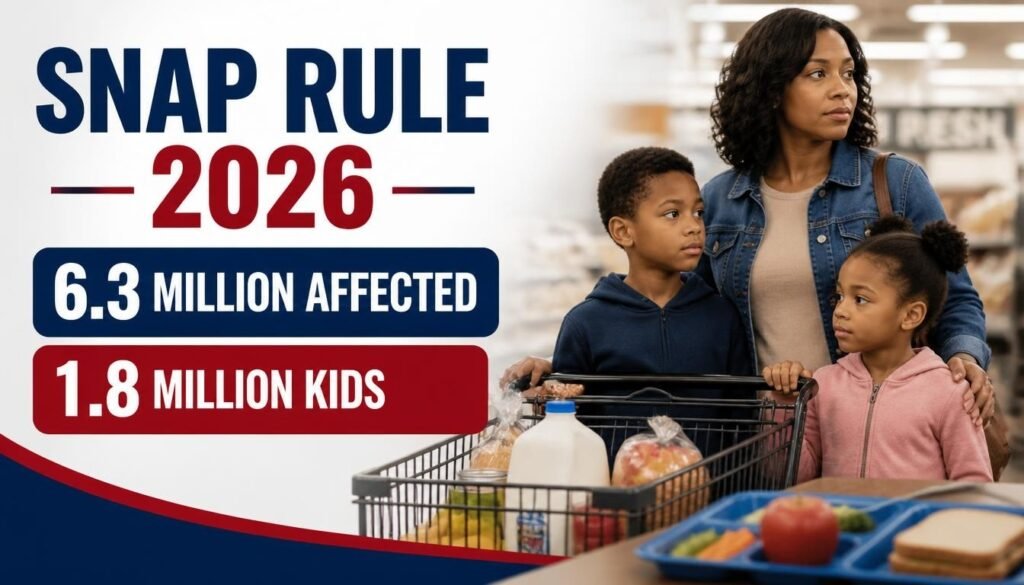
SNAP Proposed Rule 2026: at a glance
| Detail | What the proposal says |
|---|---|
| Proposed by | USDA, November 10, 2026 |
| What changes | Limits automatic SNAP eligibility (broad-based categorical eligibility) |
| People who could lose SNAP | About 6.3 million (nearly 18%), in fiscal year 2029 |
| Children losing free school meals | About 1.8 million |
| Federal savings | $44.6 billion, 2027–2031 |
| State savings | About $5.2 billion over five years |
| Comment period | 30 days |
| Status | Proposed, not final |
What the proposed SNAP rule would change?
Under current policy, families that qualify for Temporary Assistance for Needy Families (TANF) or similar benefits can automatically qualify for SNAP, because the eligibility requirements are similar. This is known as broad-based categorical eligibility.
The SNAP Proposed Rule 2026 would curb that shortcut. People who no longer qualify automatically would have to meet federal income and resource limits on their own.
How many people could lose SNAP benefits under the new USDA rule?
- 6.3 million people, or nearly 18% of SNAP recipients, would be affected in fiscal year 2029, the first year the rule would take full effect.
- SNAP enrollment has already fallen by more than 5 million people, to about 36 million, since the tax and spending law signed in July 2025.
- USDA estimates the change would cut federal SNAP spending by $44.6 billion between 2027 and 2031, and state spending by about $5.2 billion.
School meals and other programs could be hit too
Because SNAP eligibility connects to other federal programs, USDA estimates about 1.8 million children would lose eligibility for free school meals (the SNAP free school lunch link). More than 5,000 people would also lose access to a program for low-income mothers and children.
Social Security Cuts by State: 15 States Could Lose $556 a Month
Average Social Security Check at Age 65 in 2027 With COLA
What USDA says?
USDA says the change would make SNAP eligibility more standardized and keep benefits focused on the neediest households. The loss figures above come from USDA’s own analysis posted with the rule.
Is the SNAP rule final?
No. It is a proposed rule. A similar proposal was made in 2019 but never finalized, and the Biden administration withdrew it in 2021. A final version could differ from what was proposed.
What SNAP households should do now?
Nothing changes today. Your current benefits continue under existing rules.
Check with your state SNAP office if you are unsure how you qualify. USDA keeps a state directory at fns.usda.gov/snap/state-directory.
Want to comment? To comment on the SNAP proposed rule (SNAP public comment), find the docket and deadline in the Federal Register notice for this rule (document number 2026-22936). [Verify the exact comment deadline and docket link before publishing.]
Background: SNAP was already shrinking
- SNAP enrollment has fallen by more than 5 million people, to about 36 million, since the tax and spending law signed in July 2025.
- That law widened SNAP work rules: many adults must work, volunteer or train at least 80 hours a month, or they can receive benefits for only three months in a three-year period.
- The work rules now reach adults ages 55 through 64 and parents of children 14 and older. They also repeal exemptions for homeless people, veterans and young adults aging out of foster care, and limit states’ ability to waive the rules in areas with few jobs.
- The Congressional Budget Office estimated the work rules alone would cut average monthly SNAP enrollment by about 2.4 million people over 10 years.
- A USDA official has said fewer people need food stamps because the economy is strong. Anti-hunger experts say that does not change hardship for participants who remain.
Timeline: what happens next?
| When? | Event |
|---|---|
| July 2025 | Tax and spending law expands SNAP work rules |
| November 10, 2026 | USDA releases the proposed eligibility rule |
| Next 30 days | Public comment period [confirm the exact end date in the Federal Register] |
| After comments | USDA may issue a final rule, change it, or drop it |
| Fiscal year 2029 | First year USDA projects the rule at full effect |
Related news to link
- Medicare Part B premium 2027 and the 3.6% Social Security COLA (Articles 2 and 3)
- $90 Medicare payment: who qualified (Article 4)
Sources
- USDA proposed rule, Federal Register public inspection (2026-22936)
- USDA SNAP state agency directory
- CNN via ABC: Nearly 1 in 5 food stamp recipients could lose benefits
- The New York Times via GV Wire: Trump administration moves to further limit SNAP eligibility
FAQ’s on SNAP Proposed Rule 2026 :-
What is the USDA proposing?
The USDA proposed rule would curb automatic SNAP eligibility for households receiving cash aid under the Temporary Assistance for Needy Families (TANF) program. The policy is known as “broad-based categorical eligibility.” Households receiving noncash or nominal TANF services would no longer automatically qualify for SNAP.
How many people could lose SNAP benefits?
An agency analysis included in the rule says nearly 18% of SNAP recipients, about 6.3 million people, would lose benefits. That loss is estimated for fiscal year 2029.
Why would those people lose benefits?
According to the proposed rule, the affected recipients would no longer qualify because their income or resources exceed federal SNAP limits. They had been eligible under the automatic pathway, not the standard income test.
How are school meals affected?
SNAP enrollment also confers eligibility for other food aid programs, so the USDA estimates 1.8 million children would lose eligibility for free school lunch. Specifically, they would no longer be automatically eligible, though the USDA said nearly all would still qualify for free or reduced-price meals if they apply separately.
What does the USDA say in defense of the rule?
The rule says the changes would make SNAP eligibility more standardized and “preserve benefits for the truly needy.” The USDA also noted the rule would reduce federal SNAP spending by nearly $45 billion and state spending by $5.2 billion over five years.
What do critics say?
Advocates say the rule would increase paperwork for enrollees and state agencies, which could ensnare eligible participants and cause them to lose benefits.
Is this rule final?
No. The public will have 30 days to comment on the proposed rule in the Federal Register. The agency can finalize, change, or drop it after reviewing comments. The numbers above are USDA projections, not confirmed outcomes.
Has something like this been tried before?
Yes. The Trump administration proposed a similar rule ending broad-based categorical eligibility in 2019, but the Biden administration withdrew it in 2021.
How does this fit with other SNAP cuts?
More than 5.5 million people have already lost SNAP benefits since the July 2025 tax law cuts, bringing enrollment to about 36 million, per USDA data. The 6.3 million figure is described as in addition to those already lost.
Do I need to do anything right now?
Not yet. Your benefits don’t change unless the rule is finalized and takes effect. If you want to weigh in, you can submit a comment during the 30-day window on the Federal Register. If you’re worried about your household’s eligibility, your state SNAP office or a local food bank can explain how this might apply to you. For children, you can also apply for free or reduced-price school meals directly through the school.
Also Read :-
Social Security 2027: 3.6% COLA Explained
COLA by State: Who Gets the Biggest 2027 Raise?
Federal Pay Freeze 2027: Raise or Not?
Bernie Sanders Social Security $2,400 Increase: Who Pays and When?
