The federal pay freeze 2027 is now the White House’s official plan. President Donald Trump sent Congress an alternative pay plan letter on August 26 that holds base pay and locality pay at 2026 levels for most civilian federal employees in January. About two million workers on the General Schedule and related pay systems would see no across-the-board raise, even as the Social Security cost-of-living adjustment is forecast at 3.5% to 3.6%. The plan carves out exceptions: federal law enforcement personnel would get 3.8%, with the Office of Personnel Management deciding which positions qualify, and military members would get raises of about 5% to 7% depending on experience.
The freeze is a proposal, not a final decision. Under the Federal Employees Pay Comparability Act, the president’s alternative plan normally becomes the next year’s raise, and the final rates are set in an executive order that usually arrives in December. Congress can override it, and a group of lawmakers is pushing for at least 3.8% for civilians, with the FAIR Act calling for 4.1%. The funding deadline of December 11 is where the fight could land. This guide explains what the plan says, who is affected, what the freeze means in dollars, how retirees fare and what could still change. We’ll be updating this article monthly.
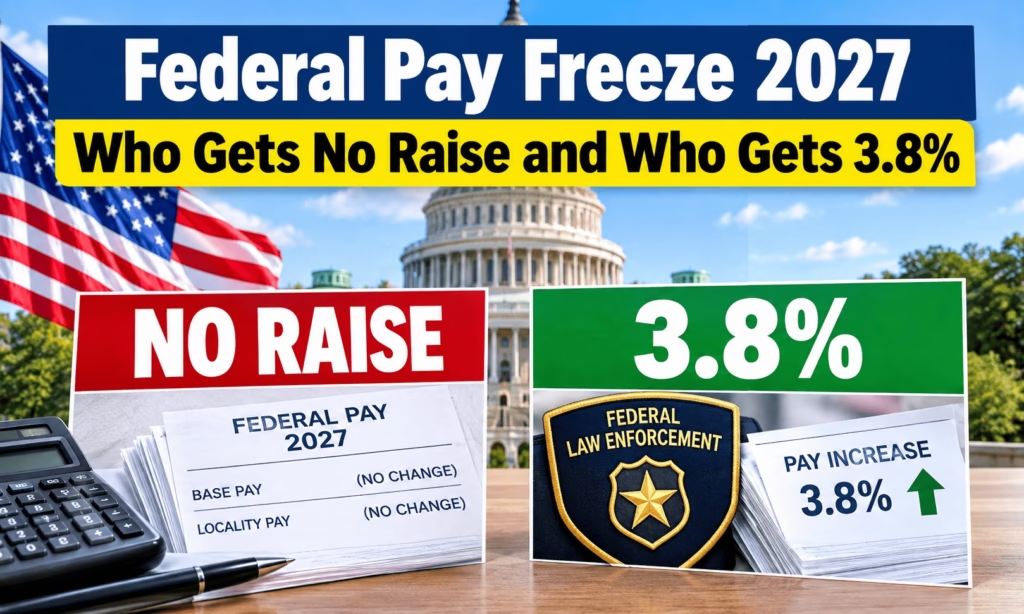
Federal Pay Freeze 2027 Key Highlights
| Item | Detail |
|---|---|
| Alternative pay plan letter | Sent to Congress on Wednesday, August 26, 2026 |
| Legal deadline for the letter | September 1, under FEPCA |
| Most civilian employees | 0% base pay and 0% locality pay change |
| Federal law enforcement | 3.8%, positions to be chosen by OPM |
| Military | About 5% to 7%, depending on experience |
| 2026 raise for comparison | 1% for most civilians, 3.8% for law enforcement |
| Employees covered by the freeze | About two million General Schedule and related employees |
| FAIR Act proposal | 4.1% for civilian employees |
| Congressional push | At least 3.8% for civilians |
| Government funding deadline | December 11, 2026 |
| Final rates set by | Presidential executive order, usually in December |
| Takes effect | January 2027 |
What the 2027 Alternative Pay Plan Says, Group by Group
| Group | Proposed 2027 adjustment |
|---|---|
| General Schedule and certain other civilian pay systems | No change to 2026 base or locality rates |
| Federal law enforcement personnel | 3.8%, with eligible positions decided by OPM |
| Active duty military | About 5% to 7%, commensurate with experience |
| Other uniformed services | 3.6%, as reported |
| Postal Service employees | Not covered, pay is set through the Postal Service’s own bargaining |
The president wrote in the letter that, for 2027, base pay and locality pay for civilian federal employees will not change from the 2026 rates. The justification was fiscal. He said the country must stay on a sustainable fiscal path, and that a large raise for federal workers while many Americans still feel the effects of recent inflation would be unfair. The letter also said the freeze is meant to avoid hurting the government’s ability to recruit and retain qualified employees, and the administration separately proposed the 3.8% raise for law enforcement to support recruitment and retention in those roles.
A freeze affects the pay scales, not individual progression. Employees remain eligible for within-grade step increases and promotions, according to FedWeek, so some people will still see their salaries rise even if the tables do not.
Why the Alternative Pay Plan Exists: FEPCA Explained
The Federal Employees Pay Comparability Act of 1990 sets a formula for the yearly pay adjustment for General Schedule employees. It has two parts: an across-the-board base pay adjustment, and a locality pay adjustment that varies by area. If the president does not act, the formula takes effect automatically.
That is why the letter matters. The administration says that without an alternative plan, locality pay would rise by an average of 20.6% in January 2027, costing $26 billion in the first year alone. By law, the president must send an alternative plan by September 1 to stop the formula from taking effect. The plan then becomes the default, unless Congress passes something different by the end of the year.
Last year offered a preview of how this can play out. The administration first signaled a freeze, but the August letter set a 1% raise for most employees and 3.8% for law enforcement as the default for 2026. Congress stayed silent, and those numbers took effect. This year’s letter follows the White House budget, which also left civilians out.
Is the 2027 Federal Pay Freeze Final?
| Path | What it would take |
|---|---|
| The freeze stands | The president signs an executive order in December confirming the plan, and Congress stays silent |
| Congress raises pay | Lawmakers pass a specific raise, such as the FAIR Act’s 4.1% or a floor of 3.8%, in a bill that becomes law by year end |
| Pay language rides on a spending bill | A full-year or additional stopgap funding measure includes a civilian pay provision |
The most realistic route for a change is the appropriations process. The freeze also needs Congress to remain silent. A specific figure enacted by the end of the year overrides the alternative plan.
Lawmakers are making a last-ditch effort. Supporters of the FAIR Act, which calls for 4.1%, say that even if it does not pass, they want a minimum of 3.8%, matching the law enforcement proposal. Many of the same members sent a letter to the president urging an across-the-board raise, and asked congressional leaders to reject the freeze, arguing that it would not keep up with rising costs and would harm recruitment and retention. The group of lawmakers has not yet shown it has the votes, and as of earlier this fall, no congressional alternative had advanced.
Social Security COLA by State: Which Retirees Get the Biggest 2027 Raise and Why?
Trump $90 Medicare Check: Who Qualifies, When It Arrives and Why $2 Billion Is Being Redirected?
Why December 11 Matters: The Funding Deadline
Government funding is the lever. President Trump signed a continuing resolution on September 2 that funds agencies at current levels from October 1 through December 11, 2026. The House passed it 370 to 48, and the Senate had approved it earlier by 90 to 6. That means there is no shutdown this month.
It also means that the end of the stopgap, December 12 if nothing passes, lines up with the usual December window for the pay executive order. Congress could attach pay language to a full-year bill or another short-term bill, and the administration could be asked to accept it.
Federal workers have reason to follow this closely. They lived through a 42-day shutdown that began on October 1, 2025, a brief lapse in early 2026 and a 76-day Homeland Security funding lapse that ended on April 30. Back pay for furloughed and excepted workers is guaranteed under the Government Employee Fair Treatment Act, but the disruption is real.
What a Freeze Means in Dollars: Raise Scenarios by Salary
| Salary | 0% freeze | 3.8% raise | 4.1% raise |
|---|---|---|---|
| $60,000 | $0 | $2,280 a year, about $87.69 per paycheck | $2,460 a year, about $94.62 per paycheck |
| $85,000 | $0 | $3,230 a year, about $124.23 per paycheck | $3,485 a year, about $134.04 per paycheck |
| $110,000 | $0 | $4,180 a year, about $160.77 per paycheck | $4,510 a year, about $173.46 per paycheck |
Paychecks are biweekly, so the table divides by 26. A within-grade step increase is separate and would come on top of these numbers.
The Real Pay Cut: Freeze vs Inflation
A freeze means a nominal raise of zero, and inflation does the rest. If prices rise 3.5% over the year, a salary that does not change loses about 3.4% of its buying power. On an $85,000 salary, that is the equivalent of about $2,900 in lost buying power over a year. The Social Security cost-of-living adjustment for 2027 is forecast at 3.5% to 3.6%, with the official figure due on October 14, so the contrast is sharp: retirees on Social Security are on track for a raise while most working federal employees are not.
The administration’s view is that fiscal discipline justifies the freeze and that federal compensation, including benefits and job security, remains competitive. Employee groups and many lawmakers argue that cumulative below-inflation raises erode pay compared with the private sector and make it harder to retain skilled workers. Both arguments are part of the public debate, and the data on pay gaps depends on the occupation and the measure used.
Federal Retirees Are Treated Differently: FERS and CSRS COLA
The federal pay freeze does not touch retiree annuities. CSRS and FERS retirees receive a cost-of-living adjustment based on the same CPI-W reading that sets the Social Security COLA, announced on October 14.
| Retirement system | Rule when inflation is above 3% | Result at a 3.5% COLA |
|---|---|---|
| CSRS | Full COLA | 3.5% |
| FERS | Inflation minus one percentage point | 2.5% |
If the COLA were between 2% and 3%, FERS retirees would get 2%, and at 2% or less they would get the full amount. Some FERS retirees, such as those under 62 who are not disability or survivor annuitants, do not receive a COLA. For a $36,000 annuity, a 3.5% CSRS COLA would add $1,260, and a 2.5% FERS COLA would add $900. The calculator attached to this article includes this comparison.
What Else Is Not Covered by the Freeze?
The freeze applies to the pay tables, not every part of compensation. Step increases and promotions continue. Many agencies pay special rates and incentives that follow separate rules. Postal Service pay is not part of the General Schedule. Within the military, pay raises follow a separate process through the defense authorization and appropriations bills. Federal health premiums and retirement contributions follow their own schedules. OPM normally announces health plan premiums for the following year in the fall, so watch for that announcement.
SNAP Benefits Changes: Who Is Losing Food Aid Now
Medicare Open Enrollment 2026: What to Check Before December 7
Federal Pay Freeze 2027 Calculator
The calculator attached to this article has two tools. The first handles your paycheck. Enter your annual salary, pick a scenario, either the proposed freeze, a 3.8% raise, the FAIR Act’s 4.1% or your own number, and set an inflation rate. You can also add an expected within-grade step increase. It shows your new salary, the change per year and per biweekly paycheck, and the change in your buying power after inflation.
The second tool is for retirees. Enter an annuity and a Social Security COLA scenario, and it shows the CSRS and FERS COLA and the new annuity amounts side by side.
For example, an employee earning $85,000 would see no change in pay under the freeze, a loss of about 3.4% in buying power at 3.5% inflation, and a $124.23 biweekly increase under a 3.8% raise. Use the tool again in December when the executive order sets the final rates.
Federal Pay Freeze 2027 Calculator
Compare the proposed freeze with other scenarios, see the effect of inflation, and estimate the 2027 retiree COLA. The freeze is a proposal until the president signs an executive order, usually in December.
1. Your 2027 pay
| New annual salary | |
| Change per year | |
| Change per biweekly paycheck | |
| Buying power change after inflation | |
| Yearly buying power lost or gained |
2. Federal retiree COLA (for comparison)
| CSRS COLA | |
| FERS COLA (if eligible) | |
| New CSRS annuity | |
| New FERS annuity |
FERS retirees generally get the full COLA when inflation is 2% or less, 2% when it is between 2% and 3%, and inflation minus one point when it is above 3%. Some FERS retirees, such as those under 62 who are not disability or survivor annuitants, do not get a COLA. Your agency or OPM confirms the amounts.
Estimates only. The calculator does not include locality differences, taxes, retirement contributions or health premiums. The official 2027 federal pay rates are set by executive order, normally in December.
How the 2027 Federal Pay Raise Gets Finalized?
There is no application for a federal pay raise, but there is a process, and it helps to know where each step stands.
- The president sent the alternative pay plan to Congress in August, before the September 1 deadline.
- Congress can respond with a specific pay provision in legislation before the end of the year.
- Congress must keep the government funded past December 11 with a full-year bill or another stopgap.
- In December, the president normally signs an executive order setting the final pay rates for January.
- OPM publishes the new pay tables, and agencies update payroll.
Federal employees and their families can contact their senators and representatives, join their unions and employee associations and follow OPM announcements. Employees should also review their budgets for early 2027 on the assumption that base pay will not change, and treat any raise as an upside.
Processing Time: When Will You Know the Final Number?
The final number should be known in December. The executive order usually comes in the second half of the month, and OPM posts the tables right after. If Congress attaches pay language to a spending bill, the timing follows the legislative calendar, which could slip if a deadline passes without a deal. A shutdown or extended stopgap would not change the pay formula, but it could delay clarity.
Payment Schedule: When New Pay Rates Show Up
| Event | Timing |
|---|---|
| Alternative pay plan sent to Congress | August 26, 2026 |
| Stopgap funding signed | September 2, 2026 |
| Social Security COLA announced, which sets the retiree COLA | October 14, 2026 |
| Funding deadline | December 11, 2026 |
| Executive order setting final rates | Usually in December |
| New pay rates take effect | First full pay period of January 2027 |
| First paychecks at the new rates | Late January or February 2027, depending on the agency's pay calendar |
| Retiree COLA appears in annuity payments | January 2027 |
Watch Out for Misinformation About the 2027 Federal Raise
Articles that say federal employees will automatically get 4.1% or a locality increase of 20.6% are mixing up the formula with the plan. The formula only takes effect if no alternative plan is in place. At the moment, the alternative plan sets a freeze for most employees, unless Congress acts. Be careful of social media posts that promise guaranteed raises, back pay or special bonuses in exchange for personal information. Rely on OPM and your agency's human resources office.
Trump $5000 Dividend Check: Is It Real, Who Would Qualify and When Could Payments Start?
Official Websites and Resources
| Resource | What it does | Link |
|---|---|---|
| OPM salaries and wages | Official pay tables and locality information | https://www.opm.gov/policy-data-oversight/pay-leave/salaries-wages/ |
| OPM | Pay, leave, benefits and policy announcements | https://www.opm.gov |
| Congress.gov | Track the FAIR Act and spending bills | https://www.congress.gov |
| White House | Executive orders and letters to Congress | https://www.whitehouse.gov |
| Federal Register | Publication of pay executive orders | https://www.federalregister.gov |
| OPM retirement services | CSRS and FERS annuity and COLA information | https://www.opm.gov/retirement-center/ |
| Thrift Savings Plan | Retirement account information | https://www.tsp.gov |
| Social Security COLA page | Official COLA announcement on October 14 | https://www.ssa.gov/cola/ |
| USAJOBS | Federal job listings and pay information | https://www.usajobs.gov |
FAQs
Will federal employees get a pay raise in 2027?
Under the current proposal, most civilian employees will not. The alternative pay plan freezes base and locality pay, unless Congress or a later order changes it.
What is the 2027 federal pay raise?
The proposal is 0% for most civilians, 3.8% for law enforcement and about 5% to 7% for the military.
Who gets a raise under the 2027 plan?
Federal law enforcement personnel, with OPM deciding which positions, and military members.
Is the federal pay freeze final?
No. The president usually signs an executive order in December, and Congress can override the plan with legislation.
What is an alternative pay plan?
It is the president's proposal to replace the automatic FEPCA raise, which the president must send by September 1 each year.
How much would the formula raise be without the plan?
The administration says locality pay would increase by an average of 20.6% and cost $26 billion in the first year.
What is the FAIR Act?
It is a bill that would give federal employees a 4.1% raise in 2027.
Can Congress change the pay freeze?
Yes, by enacting a specific raise before the end of the year, often through a spending bill.
When will we know the final 2027 federal pay raise?
Usually in December, when the executive order is signed.
Will the freeze stop my step increases?
No. Within-grade step increases and promotions are separate.
Do federal retirees get a COLA in 2027?
Yes, tied to the same CPI-W reading as Social Security, which is announced on October 14.
How much is the FERS COLA at 3.5%?
2.5%, because FERS retirees get inflation minus one point when it is above 3%.
Is there a government shutdown in October 2026?
No. A stopgap bill signed September 2 funds the government through December 11.
Does the pay freeze affect postal workers?
No. Postal Service pay is set through its own bargaining process.
Conclusion
The federal pay freeze 2027 would leave about two million civilian employees without a base or locality raise in January while law enforcement gets 3.8% and military members get about 5% to 7%. It is not final. The president's executive order normally arrives in December, Congress can override it, and the stopgap funding bill expires on December 11, which makes that date the one to watch. In the meantime, retirees are on track for a COLA, workers should plan for a flat paycheck and lawmakers are pushing for at least 3.8%. Use the calculator to see what each scenario means for your pay, follow OPM and Congress.gov, and check your own agency's payroll notices. We will update this guide as the funding deadline, the executive order and any congressional action develop.
Social Security Changes October 2026: 4 Updates That Could Affect Your Benefits