
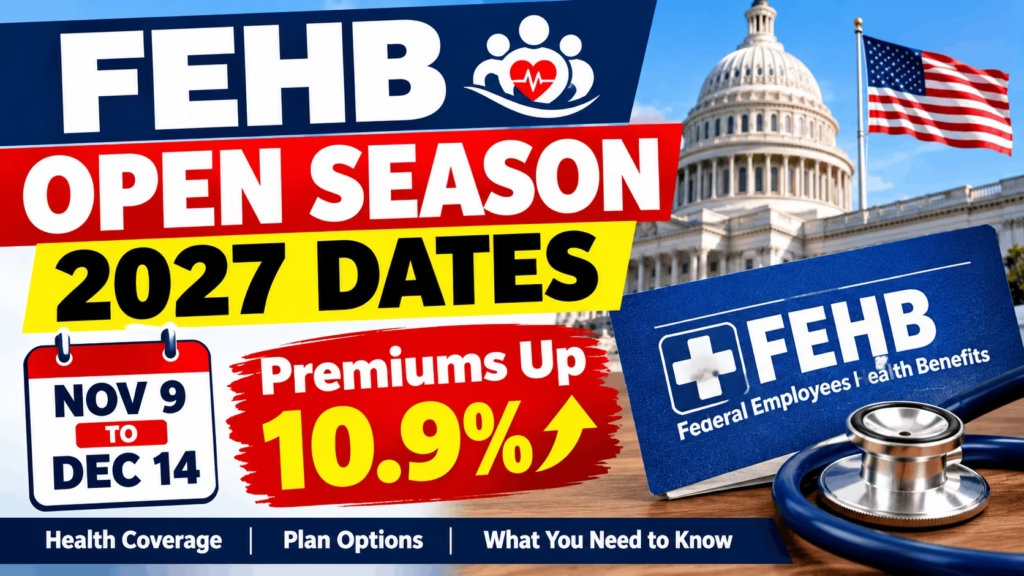
FEHB Open Season 2027: The Federal Benefits Open Season for the 2027 plan year opened on November 9 and closes on December 14, 2026. OPM says it covers the Federal Employees Health Benefits (FEHB) Program, the Postal Service Health Benefits (PSHB) Program, the dental and vision program (FEDVIP), and the flexible spending account program (FSAFEDS). As of today, you have 29 days left.
The headline number is a 10.9% average increase in what enrollees pay. OPM reports that the overall average FEHB premium rises 9.3% for 2027, down from 10.2% in 2026, and that the average enrollee share rises 10.9%, down from 12.3%. That is a slower increase than last year, but it is still a double-digit rise for the people who pay the enrollee share.
FEHB Open Season 2027
The timing makes it more pressing. Most civilian federal employees are currently slated for no pay raise in January 2027, because the president’s alternative pay plan freezes base and locality pay. That plan is not final until the December executive order, but if it stands, a 10.9% average increase in premiums falls on a flat paycheck. Open Season is the one window each year when you can reduce that cost by switching plans, so it is worth an hour of attention.
This article walks through the dates, the 2027 premium changes, plans that are leaving the program, what is new this year, and a short checklist. Dollar figures for specific plans are in OPM’s rate charts and each plan’s brochure, and you should confirm yours there before deciding.
Key Dates
Open Season begins November 9, 2026, and ends December 14, 2026. Changes you make take effect on different dates depending on who you are.
| Action | Non-Postal FEHB employees | FEHB compensationers (OWCP) | PSHB enrollees | Annuitants |
| Enroll, change plan, or change premium conversion | January 10, 2027 | January 24, 2027 | January 1, 2027 | January 1, 2027 |
| Cancel coverage | January 9, 2027 | January 23, 2027 | December 31, 2026 | December 31, 2026 |
FEDVIP and FSAFEDS changes made during Open Season take effect January 1, 2027. Your enrollment continues automatically from year to year unless you change it, with one exception. FSAFEDS does not carry over, so participants who want to continue in 2027 must re-enroll.
What Is Happening to Premiums?
FEHB
| Measure | 2027 | 2026 |
| Overall average premium | +9.3% | +10.2% |
| Average enrollee share | +10.9% | +12.3% |
| Government contribution | +8.6% | +9.2% |
PSHB
| Measure | 2027 | 2026 |
| Overall average premium | +6.7% | +9.0% |
| Average enrollee share | +8.2% | +11.3% |
| Government contribution | +6.0% | +8.0% |
FEDVIP
Average dental premiums rise 1.0% and vision premiums rise 1.6%.
Why does the enrollee share rise faster than the total premium? Because the government’s contribution grows more slowly, at 8.6% against 9.3% overall, so enrollees absorb the rest. For most employees and annuitants, the government pays the lesser of 72% of the program-wide weighted average premium or 75% of the premium for the plan you choose.
To put 10.9% in dollars, a household paying $2,000 a year toward premiums would pay about $218 more, or roughly $2,218 (my arithmetic). Averages hide a lot of variation. Individual plans rise by more or less than the average, so the plan-by-plan dollar charts matter more than the headline number.
What is driving the increases?
OPM attributes the premium increases mainly to rising prices and utilization across inpatient, physician, outpatient and surgical services, continued growth in behavioral and mental health care, and higher prescription drug spending, particularly on GLP-1s, specialty drugs and other high-cost therapies.
Plans Leaving the Program
For 2027, OPM will offer 118 plan options from 45 carriers in FEHB, 65 plan options from 17 carriers in PSHB, and 31 plan options from 11 dental and 5 vision carriers in FEDVIP.
If you are in one of the plans below, you must choose a new plan during Open Season. Otherwise you will be automatically enrolled in the designated default plan, Compass Rose Standard.
Nine FEHB options are ending:
- Independent Health Standard
- Independent Health HDHP
- Blue Care Network of Michigan, Southeast High
- UHC (Choice Primary West) High
- UHC (Choice Plus Primary West) High
- Health Net of California (Northern) High
- Health Net of California (Southern) Standard
- Health Net of California (Southern) Basic
- Health Net of California (Southern) High
In PSHB, one plan is ending: UnitedHealthcare Choice Plus Primary Postal East. Its enrollees default to Blue Cross and Blue Shield Service Benefit Plan FEP Blue Focus if they do nothing.
A default plan is chosen for you, not matched to your needs, so don’t let it happen by inaction. Check your doctors, prescriptions and cost sharing before the deadline.
What Is New for 2027?
Family member verification. This is the change most likely to cause a problem for people who wait. Under the FEHB Protection Act of 2025, anyone adding a new family member to a FEHB or PSHB plan during Open Season must submit supporting documentation so the family member’s eligibility can be verified. Gather the documents early, and ask your benefits officer what is required for your situation.
FSAFEDS debit card. New for 2027, the FSAFEDS Visa FSA Card is available for Health Care FSA and Limited Expense Health Care FSA accounts, so participants can pay eligible expenses at the point of service instead of waiting for reimbursement. Participants can choose the card or paperless reimbursement.
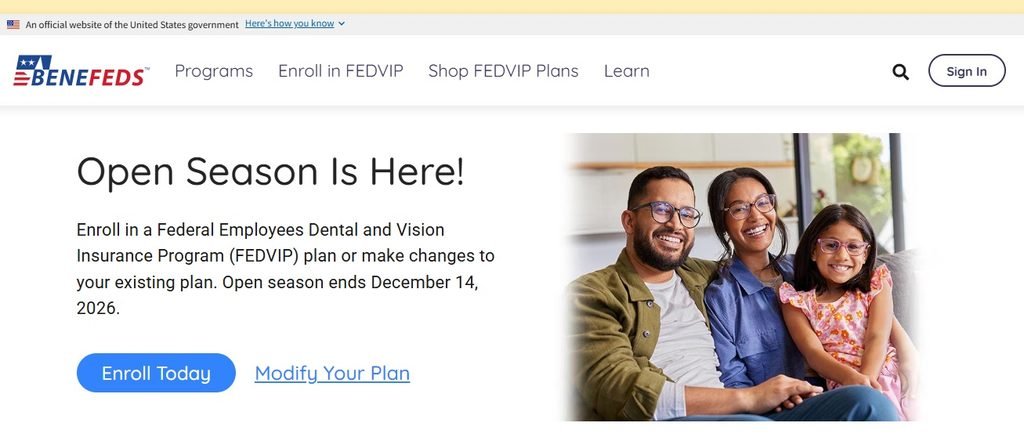
Dental cost comparison tool. FEDVIP dental enrollees with an account through BENEFEDS.gov can compare estimated out-of-pocket costs for 75 common dental services across all 11 dental carriers.
Weight-loss drug coverage. Plans will continue to cover at least one GLP-1 anti-obesity medication and at least two oral anti-obesity medications. For 2027, carriers will require documented participation in an evidence-based intensive behavioral therapy program before and during treatment. If you or a family member uses or may need these drugs, read the brochure’s rules on this carefully.
PSHB portal. The Postal Service Health Benefits System is launching a redesigned enrollee portal during Open Season, with a more streamlined process for qualifying life events.
Other benefit themes. OPM’s highlights also describe a coordinated approach to non-drug interventions for diabetes, hypertension, obesity and pain, expanded wellness incentives, optional coverage of FDA-cleared digital therapeutics, and added maternal health and midwife provisions. Coverage varies by plan, so use your plan’s brochure to see what it actually includes.
What to Do Now?
- Check whether your plan is ending. If it is on the lists above, you need to act.
- Compare total cost, not just the premium. Look at the deductible, copays, out-of-pocket maximum and prescription tiers. A lower premium can cost more if you use the plan heavily. OPM itself notes that premiums are just one factor.
- Check your doctors and your drugs. Confirm that providers are in network and that your key medications are covered, and at what cost.
- Use the official comparison tools. OPM’s plan comparison tool and the Managing My Own Health site are the right place to start. Plan brochures are the authoritative source for benefits.
- Gather family documentation now. If you are adding anyone, verification documents are required.
- Decide on FSAFEDS. If you want an FSA in 2027, you must re-enroll. Estimate your expected out-of-pocket health, dependent care, dental and vision costs and set the amount accordingly.
- Review dental and vision. The 1.0% and 1.6% average increases are small, but the dental comparison tool may find you a better fit.
- Confirm your election. After you submit changes, save the confirmation, and check your effective date in the table above.
- If you are Medicare-eligible, check how it coordinates with your plan. OPM maintains a Medicare page for FEHB and PSHB enrollees. This matters especially for PSHB enrollees.
Official Sources
These are all OPM pages or OPM documents, kept separate from the article text so you can cite or check each one.
Frequently Asked Questions
When is FEHB Open Season for 2027 coverage?
November 9 through December 14, 2026.
Is the 10.9% increase the total premium?
No. It is the average increase in the enrollee share. The overall average premium rises 9.3%, and the government contribution rises 8.6%.
How much will my premium go up?
It depends on your plan and enrollment type. The 10.9% is an average. Check OPM’s rate charts for your exact plan.
What happens if I do nothing?
Your coverage continues automatically, with the new 2027 rates. The exception is a plan that is leaving, in which case you are moved to the default plan, and FSAFEDS, which must be re-enrolled.
Which plans are leaving?
Nine FEHB options (Independent Health, a Blue Care Network of Michigan option, two UHC West options, and four Health Net of California options) and one PSHB plan (UnitedHealthcare Choice Plus Primary Postal East).
What is the default plan if mine is ending?
Compass Rose Standard for FEHB and FEP Blue Focus for PSHB.
Do I need documents to add a family member?
Yes. New this year, anyone adding a family member during Open Season must submit supporting documentation for eligibility verification.
Do I have to re-enroll in FSAFEDS?
Yes, every year, if you want to participate in 2027.
Does the pay freeze affect this?
Only indirectly. The proposed freeze is separate from premium rates, but it means a higher premium comes out of a pay level that may not change. The freeze is not final until the December executive order.

5 thoughts on “FEHB Open Season 2027: Dates, Premiums, To-Do”