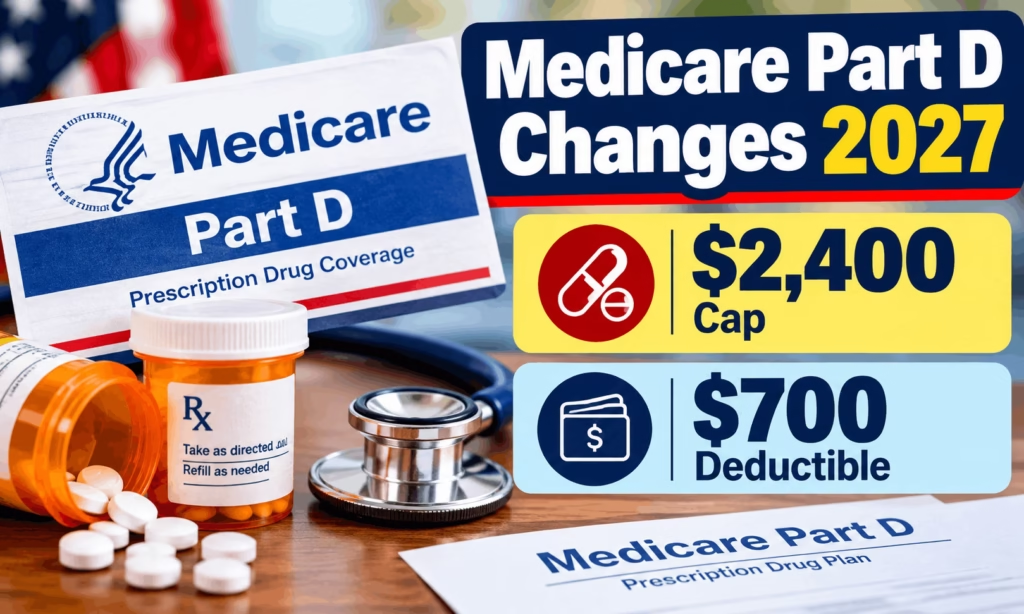
Medicare Part D changes 2027 arrive with a higher safety net and a higher entry price. The yearly cap on what you pay out of pocket for covered prescriptions rises from $2,100 to $2,400, the maximum standard deductible climbs from $615 to $700, and the national base beneficiary premium moves from $38.99 to $41.33. The bigger shift is on the premium side. On July 28, the Centers for Medicare and Medicaid Services said it would end the Part D Premium Stabilization Demonstration after 2026, so stand-alone drug plans will set 2027 prices without the federal cushion that kept increases small. Plans were required to send their Annual Notice of Change letters by September 30, which means the paperwork may already be in your mailbox. Open enrollment runs from October 15 through December 7. Reading that letter this month is one of the most useful money tasks a Medicare member can do. We’ll be updating this article monthly.
There is good news in the same package. Negotiated prices for 15 more costly drugs, including Ozempic, Wegovy and Rybelsus, take effect on January 1, 2027, adding to the first 10 drugs that were repriced this year. CMS estimates those prices will save Part D enrollees about $685 million in out-of-pocket costs in 2027. The $35 monthly limit on covered insulin continues, recommended adult vaccines stay at no cost, and the Medicare Prescription Payment Plan lets people spread large pharmacy bills across the year. This guide explains every figure, shows who gains and who pays more, walks through enrollment, timing and key dates, and ends with a calculator that compares your 2026 and 2027 drug costs.
Medicare Part D Changes 2027 Key Highlights
| Item | 2026 | 2027 |
|---|---|---|
| Annual out-of-pocket cap | $2,100 | $2,400 |
| Maximum standard deductible | $615 | $700 |
| Base beneficiary premium | $38.99 | $41.33 |
| National average monthly bid | Not reported here | $296.05 |
| Average stand-alone plan premium | $35.09 | About $36 projected |
| Premium stabilization subsidy | $10 a month per enrollee | Ends after 2026 |
| Monthly insulin cap | $35 | $35 |
| Drugs with negotiated prices | 10 | 25, after 15 more are added |
| Open enrollment window | October 15 to December 7 | October 15 to December 7, 2026 |
| New plan year starts | January 1, 2026 | January 1, 2027 |
What Is Changing in Medicare Part D for 2027?
Five changes matter for most people.
- The out-of-pocket cap rises by $300. Once your qualifying spending reaches $2,400, you pay nothing more for covered Part D drugs for the rest of the year.
- The maximum deductible rises by $85, a 13.8 percent jump that is the steepest one-year increase since the redesigned benefit began.
- Stand-alone plan premiums are likely to rise because the demonstration that gave plans a $10 monthly subsidy and limited any plan’s yearly increase to $50 is ending.
- Negotiated prices apply to 15 more drugs on January 1.
- Medicare Advantage plans with drug coverage keep their own rules, but they must follow the same cap and deductible limits.
CMS finalized the cap and deductible in its Calendar Year 2027 rate announcement on April 6, 2026. The national average bid and the base beneficiary premium were released on July 28.
Medicare Part D Out-of-Pocket Cap 2027: How the $2,400 Limit Works
The cap is the most important protection in the benefit. It counts what you pay for covered drugs, which includes the deductible, copays and coinsurance. When your total reaches $2,400, the plan covers the rest. The Inflation Reduction Act set the cap at $2,000 in 2025 and indexes it each year, so it has risen to $2,100 and now $2,400.
Not everything counts. Drugs your plan does not cover, drugs paid for under Part B and your monthly premium do not count toward the cap.
The standard benefit now has three stages: a deductible, a coinsurance stage and then the cap. Here is how annual out-of-pocket costs change for different spending levels, assuming the full standard deductible and 25 percent coinsurance. Many plans use copays instead, so your plan may be cheaper.
| Annual drug spending at plan prices | 2026 out-of-pocket | 2027 out-of-pocket | Change |
|---|---|---|---|
| $1,200 | $761 | $825 | up $64 |
| $2,400 | $1,061 | $1,125 | up $64 |
| $6,000 | $1,961 | $2,025 | up $64 |
| $12,000 | $2,100 | $2,400 | up $300 |
| $30,000 | $2,100 | $2,400 | up $300 |
The pattern is clear. People with modest drug bills pay about $64 more because of the higher deductible. People with very expensive drugs pay up to $300 more, because the cap is higher. Those figures are the author’s calculations from the published parameters.
FEHB Open Season 2027 Dates: November 9 to December 14, Premiums Up 10.9% and What to Do Now
Part D Deductible 2027: Why It Is Rising to $700
The deductible is a maximum for standard plans, not a requirement. Plans may charge less than $700, and some charge none. Many exempt lower-cost generic drugs from the deductible altogether, so you may pay a small copay from your first fill.
Read your plan’s notice to see whether the deductible applies to every drug or only to certain tiers. A plan with a $0 deductible can still come with a higher premium or tougher rules, so look at the total yearly cost, not just one number.
Part D Premiums 2027: Why They May Go Up
The base beneficiary premium is a benchmark, not what your plan charges. It rises from $38.99 to $41.33, about 6 percent. Your own premium depends on the plan, the pharmacy network and the drugs it covers.
The larger story is the end of the stabilization demonstration. KFF reported that the program was worth about $9.8 billion, and it had reduced premiums for stand-alone plans by $10 a month for each enrollee while capping any plan’s yearly increase at $50. Without it, plans can raise prices more freely. One industry projection puts the average stand-alone premium at about $36 in 2027, up from $35.09, but an average hides wide differences. Some plans could rise by far more than a dollar, and some enrollees will see their old plan disappear.
Two cautions follow. The plan you picked last year may no longer be the cheapest. And premiums are only part of the cost, so compare the deductible, the copays on your drugs and the pharmacies in the network.
Medicare Negotiated Drug Prices 2027: 15 More Drugs Join the List
Medicare’s drug price negotiation program expands on January 1. The first 10 drugs, including Eliquis, Jardiance, Xarelto, Januvia and Entresto, got negotiated prices in 2026 with discounts of 38 to 79 percent off list. The second round covers 15 drugs used for diabetes, obesity, asthma, COPD, cancer and other conditions.
The headline drug is semaglutide. CMS set a maximum fair price of $274 for a 30-day supply of Ozempic, Rybelsus and Wegovy, compared with a 2024 list price of $959, a cut of about 71 percent. CMS estimates the new prices will save Medicare about $12 billion a year and save Part D enrollees about $685 million out of pocket in 2027. A news summary says roughly 5.3 million people with Part D will pay less.
An important caution: a negotiated price is not your copay. It is what Medicare plans and drugmakers settle on for the drug. Your plan still sets your deductible, tier and coinsurance, and it can require prior authorization or step therapy. So the savings you see depend on how your plan applies the price.
Medicare Prescription Payment Plan: Spread Out Your Drug Costs
The Medicare Prescription Payment Plan is a way to avoid big bills at the pharmacy counter. If you opt in, you pay nothing at the pharmacy, and your plan sends you a monthly bill for the costs you owe. Your payments are spread across the rest of the year, and there are no fees or interest. You can join at any time, and the plan can be useful in January and February, when the deductible makes pharmacy bills highest. The program does not reduce what you owe. It changes the timing. The calculator below estimates what a smoothed monthly payment would look like.
Other Part D Protections That Continue in 2027
- The $35 monthly cap on covered insulin continues.
- Recommended adult vaccines covered under Part D are free of cost sharing.
- There is no coverage gap, often called the donut hole.
- Extra Help, the low-income subsidy, continues to reduce premiums, deductibles and copays for people who qualify. You can apply through Social Security.
Part D Late Enrollment Penalty and IRMAA
Two costs catch people off guard.
The late enrollment penalty applies if you go 63 days or more without creditable drug coverage after you are first eligible. It is 1 percent of the national base beneficiary premium for each full month you went without. At $41.33 for 2027, that is about 40 cents a month for each month, and it lasts as long as you have Part D.
IRMAA is a surcharge for higher earners. In 2026, the Part D surcharge ranged from about $14.50 to $91.00 a month, depending on income from two years earlier. The 2027 surcharge amounts have not yet been published. IRMAA is paid to Medicare, not the plan, and is normally taken from your Social Security payment.
Federal Pay Freeze 2027: Who Gets No Raise and Who Gets 3.8%
Trump $90 Medicare Check: Who Qualifies, When It Arrives and Why $2 Billion Is Being Redirected?
How to Compare Part D Plans Before Open Enrollment?
- Look for your Annual Notice of Change letter. Plans had to send it by September 30. It lists changes in premiums, deductibles, copays and drug coverage for 2027.
- Write down every prescription, the dose and how often you refill it.
- Use the Medicare Plan Finder to enter your drugs and your pharmacy, and compare estimated yearly costs.
- Check each plan’s formulary, prior authorization rules and preferred pharmacies.
- Look at total cost, which is premium plus deductible plus drug costs, rather than the premium alone.
- Call 1-800-MEDICARE or your State Health Insurance Assistance Program for free, unbiased help.
The Plan Finder typically shows 2027 plan details starting in October. If you do nothing, most plans simply renew you, even if the plan’s costs went up or your drug moved to a pricier tier. That is why checking matters.
How to Enroll in a Medicare Part D Plan?
You can join a Part D plan if you have Medicare Part A, Part B or both and live in the plan’s service area.
- Decide whether you want a stand-alone plan, which pairs with Original Medicare, or a Medicare Advantage plan that includes drug coverage.
- Compare plans in the Medicare Plan Finder.
- Enroll online through the plan or Medicare.gov, by phone or by paper form.
- Confirm the effective date and how you will pay the premium.
People first becoming eligible for Medicare have an Initial Enrollment Period. Everyone else generally enrolls or switches during open enrollment, from October 15 to December 7. People in Medicare Advantage can also switch plans or return to Original Medicare from January 1 to March 31.
Part D Processing Time: When Does Coverage Start?
If you enroll or change plans between October 15 and December 7, the new coverage begins on January 1, 2027. If your enrollment request arrives close to December 7, confirm that the plan received it and ask for a written confirmation. You should receive a welcome letter and member ID card before the new year.
For people who qualify for a special enrollment period, coverage generally starts on the first day of the month after the plan receives the request.
Part D Payment Schedule: When Do You Pay and Key Dates
You can pay your Part D premium several ways: a monthly bill from the plan, deduction from your Social Security or Railroad Retirement payment, or automatic payment from a bank account if your plan offers it. Drug costs at the pharmacy follow the plan design, and the payment plan can spread them out.
| Date | What happens |
|---|---|
| April 6, 2026 | CMS finalizes the 2027 cap and deductible |
| July 28, 2026 | CMS announces the base premium and ends the stabilization demonstration |
| September 30, 2026 | Deadline for plans to send Annual Notice of Change letters |
| October 15, 2026 | Open enrollment begins |
| December 7, 2026 | Open enrollment ends |
| January 1, 2027 | New plan year, new cap, deductible and negotiated prices start |
| January 1 to March 31, 2027 | Medicare Advantage open enrollment period |
| January 2027 | Prescription Payment Plan helps smooth early-year costs |
Medicare Part D Cost Calculator: Compare Your 2026 and 2027 Costs
Use the calculator below to compare your estimated costs under the 2026 and 2027 rules. Enter your monthly drug spending, your plan’s deductible and coinsurance, and your premium. It shows when you would hit the cap and what a monthly payment under the payment plan could look like.
Medicare Part D 2027 cost estimator
Compare what your prescriptions could cost you in 2026 and 2027 under the standard benefit: a deductible, then coinsurance, then a yearly cap. Enter the numbers from your plan’s Annual Notice of Change for the best result.
Estimates use the standard Part D design: you pay the full plan price until the deductible is met, then coinsurance, and nothing more once your out-of-pocket spending reaches the cap ($2,100 in 2026, $2,400 in 2027). The 2026 deductible limit is $615 and the 2027 limit is $700. Many plans charge copays, skip the deductible for low-cost drugs or use different tiers, so your real bill can differ. The $36 and $35.09 premium defaults are published average standalone-plan figures, not your plan’s price, and any income-related surcharge is not included. Drugs paid for under Part B, drugs your plan does not cover and premiums do not count toward the cap.
Medicare Advantage Drug Coverage vs a Stand-Alone Part D Plan
Many Medicare Advantage plans include drug coverage, often called MA-PD plans. They follow the same federal cap and deductible limits, but they set their own premiums, networks and formularies. The stabilization demonstration applied only to stand-alone plans, not Medicare Advantage plans with drug coverage, so the premium effect may differ.
If you have Original Medicare and a stand-alone plan, switching to Medicare Advantage can change your doctors, hospitals and coverage rules in ways that go well beyond drugs, so look at the whole plan.
Who Pays More and Who Pays Less in 2027?
People with low to moderate drug use are likely to pay a bit more, mainly from the higher deductible and any premium increase. People with expensive medications will see a higher ceiling on what they pay, up to $300 more than in 2026. People who take one of the 15 negotiated drugs may see lower costs, depending on how their plan structures coinsurance. People with Extra Help are better protected from most of these changes.
Social Security COLA by State: Which Retirees Get the Biggest 2027 Raise and Why?
Medicare Open Enrollment 2026: What to Check Before December 7
Official Medicare Part D Links: Plan Finder, Login, Extra Help and Help Lines
| Resource | Use it for | Link |
|---|---|---|
| Medicare Plan Finder | Compare 2027 drug plans and costs | https://www.medicare.gov/plan-compare |
| Medicare.gov account login and registration | View your plan, claims and drug list | https://www.medicare.gov/account/login |
| Medicare Prescription Payment Plan | How to opt in and spread out costs | https://www.medicare.gov/prescription-payment-plan |
| Extra Help with drug costs | Apply for the low-income subsidy | https://www.ssa.gov/medicare/part-d-extra-help |
| CMS | Official rate announcements and fact sheets | https://www.cms.gov |
| State Health Insurance Assistance Program | Free local counseling | https://www.shiphelp.org |
| Social Security Medicare page | Sign up for Medicare | https://www.ssa.gov/medicare |
| KFF | Independent Part D analysis | https://www.kff.org |
Medicare Part D Changes 2027 FAQs
What is the Medicare Part D out-of-pocket cap for 2027?
$2,400, up from $2,100 in 2026.
What is the Part D deductible in 2027?
The maximum standard deductible is $700, up from $615. Some plans charge less.
What is the base beneficiary premium for 2027?
$41.33 a month, up from $38.99.
Why will some Part D premiums rise in 2027?
CMS is ending a demonstration that gave stand-alone plans a $10 monthly subsidy and limited yearly premium increases.
When is Medicare open enrollment for 2027 coverage?
October 15 through December 7, 2026.
Which drugs get negotiated prices in 2027?
Fifteen drugs, including Ozempic, Rybelsus and Wegovy, take effect on January 1, 2027.
Is insulin still capped at $35?
Yes, for covered insulin.
Do I have to change plans?
No, but checking is smart because costs and drug coverage can change.
Will my Part D premium go up in 2027?
Many stand-alone premiums are expected to rise because a federal subsidy is ending, but the amount depends on your plan.
What counts toward the Part D out-of-pocket cap?
Your deductible, copays and coinsurance for covered drugs. Premiums do not count.
What happens when I reach $2,400 in Part D?
You pay $0 for covered Part D drugs for the rest of the year.
Is Ozempic covered by Part D in 2027?
Plans must include the negotiated drug at its negotiated price, but your plan still sets the deductible, tier and any prior authorization.
How do I join the Medicare Prescription Payment Plan?
Contact your plan or pharmacy, or opt in through your plan’s process.
What is the Part D late enrollment penalty?
One percent of the national base premium for each full month without creditable coverage.
Can I change my Part D plan after December 7?
Only if you qualify for a special enrollment period or, if you have Medicare Advantage, during the January 1 to March 31 window.
What is Extra Help?
A program that lowers drug costs for people with limited income and resources. You apply through Social Security.
Conclusion
Medicare Part D changes 2027 raise the ceiling on what you can be asked to pay, raise the deductible and remove a subsidy that kept stand-alone premiums in check, while adding 15 negotiated drug prices that could cut costs for millions. The practical response is simple. Find your Annual Notice of Change, price your drug list in the Plan Finder, compare total yearly cost rather than premium alone and decide before December 7. If your drug costs are high, check the Medicare Prescription Payment Plan. If your income is limited, apply for Extra Help. Use the calculator to see where you stand, and rely on Medicare.gov and your plan’s own letters for the final word. We’ll be updating this article when CMS releases more 2027 plan data and any new guidance.
Trump $5000 Dividend Check: Is It Real, Who Would Qualify and When Could Payments Start?