
Child Tax Credit 2026: If you have a child under 17, the Child Tax Credit (CTC) is one of the largest tax breaks available to you. For the 2026 tax year, it is worth up to $2,200 per qualifying child. But “up to” matters. Whether you actually receive the full $2,200 depends on your income, your tax bill, the Social Security numbers on your return, and whether your child passes every IRS test.
The Child Tax Credit is also frequently misunderstood. It is not a monthly check, and nothing is being mailed out this month. You claim it on your federal tax return, and for 2026 that means filing in early 2027. A family can be fully eligible and still see less than $2,200 per child if the credit is larger than the income tax they owe, because only part of it is refundable.

Child Tax Credit 2026
This guide is based on the IRS’s own pages and announcements. It explains who qualifies, how the income limits work, how the refundable portion works, what the IRS announced for 2027, how to claim the credit, and the mistakes that most often cost families money. A table of official links and a FAQ section follow the main text.
How Much Is the Child Tax Credit for 2026?
The IRS says the Child Tax Credit is worth up to $2,200 per qualifying child, and the refundable part, the Additional Child Tax Credit (ACTC), is up to $1,700 per child for 2026. The IRS’s announcement of 2027 figures confirms the 2026 numbers: it describes the 2027 credit of $2,300 as an increase of $100 from 2026, and the 2027 refundable amount of $1,800 as up $100 from 2026.
The IRS describes three related pieces:
- Child Tax Credit (CTC): a non-refundable credit that reduces your tax bill.
- Additional Child Tax Credit (ACTC): the refundable part, which can produce a refund if the Child Tax Credit is more than the tax you owe.
- Credit for Other Dependents (ODC): a non-refundable credit of up to $500 for dependents who do not qualify for the Child Tax Credit, such as an older child.
Do You Qualify? The IRS Tests
To claim the credit, you (and your spouse, if filing jointly) and each qualifying child must have a Social Security number that is valid for employment in the United States and issued before the due date of the return, including extensions.
A child with only an ITIN cannot be claimed for the Child Tax Credit, though that child may qualify for the $500 ODC.
The IRS also says a qualifying child generally must:
- Be under 17 at the end of the tax year. For 2026, that means under 17 on December 31, 2026.
- Be your son, daughter, stepchild, eligible foster child, sibling, step-sibling, half-sibling, or a descendant of one of these, such as a grandchild, niece or nephew.
- Not provide more than half of their own support.
- Have lived with you for more than half the tax year.
- Be claimed as a dependent on your return.
- Not file a joint return for the year, unless it was filed only to claim a refund of withheld or estimated tax.
- Be a U.S. citizen, U.S. national or U.S. resident alien.
One caution: the IRS’s Child Tax Credit page, last reviewed October 29, 2026, still words these tests for the 2025 tax year. The 2026 rules are expected to work the same way, but confirm against the final 2026 instructions for Schedule 8812 when they are released.

Income Limits: When the Full $2,200 Starts to Shrink
According to the IRS, you qualify for the full credit for each qualifying child if you meet all the eligibility factors and your income is not more than $200,000, or $400,000 if filing a joint return. Higher-income parents and guardians may qualify for a partial credit.
The standard phase-out reduces the credit by $50 for every $1,000, or fraction of $1,000, of income above the threshold. Here is an example, for illustration only:
- A married couple filing jointly, with two qualifying children and modified adjusted gross income of $430,000.
- Full credit before the phase-out: 2 × $2,200 = $4,400.
- Income over the threshold: $430,000 − $400,000 = $30,000.
- Reduction: 30 × $50 = $1,500.
- Credit after the phase-out: $4,400 − $1,500 = $2,900.
If your income is near a threshold, do not estimate. Use the worksheet in the Schedule 8812 instructions or your tax software.
The Refundable Part: Why Some Families Get Less Than $2,200?
This is the piece that surprises most people. The Child Tax Credit first reduces your income tax, dollar for dollar. If the credit is bigger than your tax, the leftover can be refunded only through the ACTC, and that refund is capped.
The IRS says you may qualify for the ACTC, up to $1,700 per qualifying child for 2026, if you have little or no federal income tax liability. You must have earned income of at least $2,500 to be eligible. The standard calculation is 15% of earned income above $2,500, subject to the per-child cap. Some families with three or more children can use an alternative calculation on Schedule 8812.
Two illustrations, using the standard rules:
Example 1: lower income. A single parent has one child, $18,000 of earned income and no federal income tax owed.
- 15% of ($18,000 − $2,500) is $2,325, which is above the cap.
- The refundable amount is capped at $1,700.
- The remaining $500 of the $2,200 credit goes unused.
Example 2: moderate income. A parent has one child and owes $3,000 in federal income tax before credits.
- The $2,200 credit wipes out $2,200 of that tax.
- Because the credit is fully used against tax owed, nothing needs to be refunded through the ACTC.
So “full $2,200” in practice means the credit is fully applied, either against tax you owe or, within the cap, as a refund. A family with very low income can be eligible and still see $1,700 per child rather than $2,200.
What the IRS Announced for 2027?
On November 5, 2026, the IRS released its annual inflation adjustments for tax year 2027 (IR-2026-133), with the details in Revenue Procedure 2026-35. For the Child Tax Credit:
- The maximum credit for 2027 is $2,300, an increase of $100 from 2026.
- The refundable amount for 2027 is $1,800, also up $100.
- The 2027 adjustments generally apply to returns filed in 2028.
- The maximum Earned Income Tax Credit for families with three or more children rises to $8,496 for 2027, from $8,231 for 2026.
The practical takeaway is that the $2,300 figure does not apply to the return you file next spring. That return, for tax year 2026, uses $2,200 and $1,700. Be wary of any article or ad that says you can claim $2,300 for 2026.
How to Claim the Credit?
Check your Social Security numbers. Confirm that you, your spouse if filing jointly, and each child you plan to claim have valid SSNs. An SSN issued after the return due date, including extensions, does not count for the credit on that return.
Use the IRS Interactive Tax Assistant. The IRS offers a tool for checking whether a child or dependent qualifies for the Child Tax Credit or the ODC.
Gather support documents. Keep records that show your child lived with you for more than half the year, such as school or medical records, in case the IRS asks.
List your children on Form 1040. The IRS says you claim the Child Tax Credit, ACTC or ODC by entering your children and other dependents on Form 1040 and attaching a completed Schedule 8812.
File electronically with direct deposit. It is the fastest route to a refund, according to the IRS’s refund guidance.
Track your refund. Use the IRS’s Where’s My Refund tool.
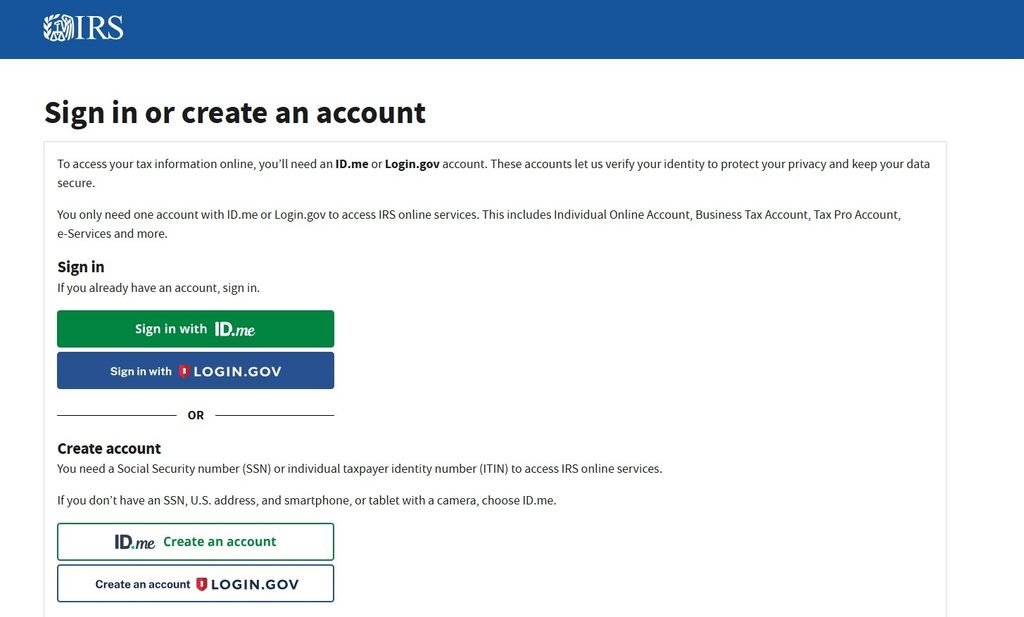
You may be able to claim the credit even if you do not normally file a tax return. If your income is low, you can still file to claim it.
Refund Timing
The IRS says it cannot issue refunds before mid-February if you claim the Earned Income Tax Credit or the ACTC. This applies to your entire refund, not just the portion tied to those credits. The agency suggests checking Where’s My Refund in mid-to-late February for a personalized refund date. Check the IRS’s When to File page for the filing dates and the 2027 deadline.
Common Mistakes That Cost Families Money
Claiming a child who has no valid SSN. This is now one of the biggest reasons for a denied or reduced credit. An ITIN does not substitute for an SSN for the CTC.
Assuming age 17 still counts. A child who turns 17 on or before December 31, 2026 does not qualify for the CTC for 2026, though the child may qualify for the $500 ODC.
Both parents claiming the same child. Only one person can claim a child as a dependent. For separated or divorced parents, residency and custody rules decide who can claim the credit.
Expecting the refundable amount to equal the credit. As the examples above show, the refundable cap can leave part of the credit unused for lower-income families.
Ignoring income thresholds. Higher earners can lose part of the credit, so check your modified adjusted gross income before assuming the full amount.
Responding to scam messages. The IRS has a reporting page for fake IRS, Treasury or tax-related emails and messages. The IRS does not run a separate application for a “2026 Child Tax Credit payment,” so be skeptical of messages that offer one.
Official Sources
Frequently Asked Questions:-
How much is the Child Tax Credit for 2026?
Up to $2,200 per qualifying child, according to the IRS. Up to $1,700 per child of that may be refundable.
Will the Child Tax Credit be $2,300?
For tax year 2027, yes. The IRS announced on November 5, 2026 that the 2027 maximum is $2,300, with $1,800 refundable. That applies to returns filed in 2028, not the one you file in 2027.
What is the income limit?
You get the full credit if your income is not more than $200,000, or $400,000 on a joint return. Above that, the credit is reduced and you may get a partial credit.
Is the Child Tax Credit refundable?
Partly. The refundable portion, the ACTC, is up to $1,700 per child for 2026, and you must have at least $2,500 of earned income to be eligible.
My child has an ITIN. Can I get the credit?
Not the CTC. The child may qualify for the Credit for Other Dependents, which is worth up to $500 and requires an SSN, ITIN or ATIN.
My child turns 17 in 2026. Do I lose the credit?
A child must be under 17 at the end of the tax year to qualify for the CTC. A child who is 17 by December 31, 2026 does not qualify for 2026, but may qualify for the $500 ODC.
Can I claim the credit if I do not normally file a return?
The IRS says you may be able to claim the credit even if you do not normally file a tax return. Check the IRS’s free filing options if you need help.
When will I get my refund if I claim the ACTC?
The IRS cannot issue refunds before mid-February for returns claiming the ACTC or EITC. Check Where’s My Refund in mid-to-late February.
What if the IRS denies my claim?
The IRS has guidance on what to do if it denies a credit claim, and a page for responding to letters or audits. Keep documents showing residency, relationship and support.
Where can I check whether my child qualifies?
Use the IRS Interactive Tax Assistant, linked in the table above.
Do I need a Social Security number for my child?
Yes. The IRS says you (and your spouse, if filing jointly) and each qualifying child must have a Social Security number valid for employment in the U.S., issued before the return due date including extensions.

7 thoughts on “Child Tax Credit 2026: Do You Get the Full $2,200?”