
Medicaid Eligibility 2026: Medicaid eligibility depends on your state, your household income and your category (adult, parent, child, pregnant, older or disabled). In states that expanded Medicaid, adults 19 to 64 generally qualify at or below 138% of the federal poverty level, about $22,025 a year ($1,835 a month) for one person in 2026.
Starting January 1, 2027, most of these expansion adults must also show 80 hours a month of work or other qualifying activity. The program is jointly funded by the federal government and the states, and each state runs its own application process and uses its own program names.
Medicaid 2026
Medicaid is the largest source of health coverage for low-income Americans, and the rules differ more from state to state than most people expect. Two neighbors with identical incomes can get different answers because states set their own limits for parents, children and older adults, and not every state has expanded coverage to all low-income adults.
2026 is also a year of change. A 2025 federal law (H.R. 1) is reshaping who can enroll and how often people must prove they still qualify. CMS issued its rule on Medicaid work requirements in June 2026, a federal court ruled on part of that rule on October 29, and the main requirements begin on January 1, 2027. If you are applying now, or you are already covered, the next few weeks matter.
How Medicaid Eligibility Works?
Medicaid and the Children’s Health Insurance Program (CHIP) provide free or low-cost coverage to eligible low-income adults, families and children, pregnant women, older adults and people with disabilities. Federal rules set a floor, but eligible income levels, covered services and costs differ by state.
Income-based groups (children, pregnant women, parents and expansion adults) are generally judged on Modified Adjusted Gross Income (MAGI), counted much as the IRS counts it, for your tax household. Limits are expressed as a percentage of the federal poverty level (FPL), which HHS updates each January.
2026 Income Limits for Adults
In states that expanded Medicaid, the adult limit is 138% of FPL. That is the federal 133% level plus a 5-percentage-point income disregard. Using the 2026 guidelines for the 48 contiguous states and D.C.:
| Household size | 2026 FPL (100%) | 138% FPL per year | 138% FPL per month |
| 1 | $15,960 | $22,025 | $1,835 |
| 2 | $21,640 | $29,863 | $2,489 |
| 3 | $27,320 | $37,702 | $3,142 |
| 4 | $33,000 | $45,540 | $3,795 |
Each additional person adds $5,680 to the poverty guideline (about $7,838 at 138%). Alaska and Hawaii have higher guidelines: $19,950 and $18,360 for one person. At 138%, that is roughly $27,531 and $25,337 a year.
Several things can change your result:
- Non-expansion states. If your state hasn’t expanded Medicaid, you may qualify under narrower rules based on income, household size, family status (such as pregnancy or caring for young children), disability and age. HealthCare.gov advises applying even if you think you won’t qualify.
- Children and pregnancy. Limits are generally much higher. For example, Illinois lists limits of up to 213% of FPL for pregnant women and up to 318% for children in its All Kids program. Your state’s numbers will differ.
- State rules. Parent limits in particular vary widely, so check your state.
Who Qualifies, Group by Group?
Expansion adults (19 to 64). Income at or below 138% of FPL in expansion states. There is generally no asset test for MAGI groups.
Parents and caretakers. Qualify under state-set income limits, which are often lower than the expansion limit.
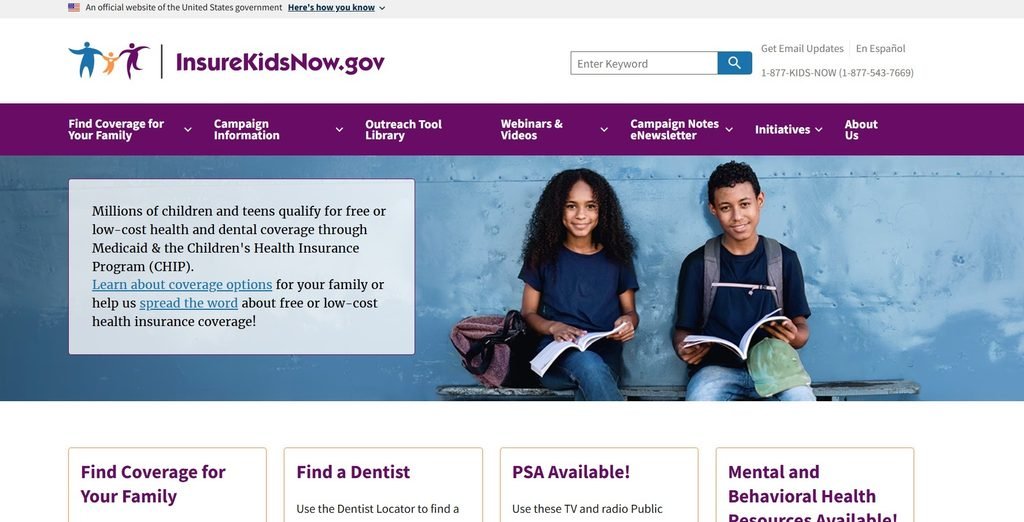
Children and CHIP. Children qualify at higher incomes than adults in every state. CHIP covers children in families that earn too much for Medicaid. You can learn about CHIP in your state at InsureKidsNow.gov or by calling 1-877-543-7669.
Pregnant women. Higher limits than other adults, with postpartum coverage in states that provide it.
Older adults and people with disabilities. These groups are often assessed under rules tied to SSI, which means asset limits can apply. SSA says people eligible for SSI are generally eligible for Medicaid, though you may still need to apply with your state. For nursing home and other long-term care, states may use a special income limit of up to 300% of the SSI federal benefit rate. That is $2,982 a month in 2026 and $3,087 in 2027, based on SSA’s $994 and $1,029 figures. States also review past asset transfers when someone applies for long-term care coverage.
Citizenship and immigration status. Under a recent law change, only people with certain statuses are now eligible for full Medicaid: lawful permanent residents (green card holders), Cuban or Haitian entrants, and Compact of Free Association migrants. Depending on the state, certain lawfully residing children and pregnant women may also be eligible.
You must also live in the state where you apply.
What Changes on January 1, 2027?
Work requirements
On June 1, 2026, CMS issued an interim final rule on Medicaid community engagement requirements. The requirement applies to non-pregnant adults 19 to 64 who are not on Medicare and who are in the Medicaid adult group or certain waiver programs. CMS says 43 states and D.C. cover these populations and must implement the requirement, generally by January 1, 2027.
To meet it for a month, a person can:
- Work, do community service, or take part in a work program for at least 80 hours,
- Be enrolled in school at least half-time,
- Combine those activities to reach 80 hours, or
- Earn at least 80 times the federal minimum wage, which is $580 a month.
Exemptions include people who are pregnant or postpartum, medically frail or disabled, parents or caregivers of a child 13 or younger or of a person with a disability, American Indians and Alaska Natives, former foster care youth, veterans with a total disability rating, people in substance use treatment, people who meet TANF or SNAP work rules, and certain others. States may also offer short-term hardship exceptions, such as for a hospital stay or a disaster declaration.
Process. States verify compliance at application and renewal. If they can’t verify it, they must send a notice and give you 30 calendar days to show you comply or are exempt. People disenrolled for noncompliance can reapply at any time. HealthCare.gov warns that if you lose Medicaid over the work requirement, you may get Marketplace coverage but won’t qualify for savings on it.
Some states moved early. CMS noted that Nebraska had already put its requirement in place.
Court ruling on “medically frail”
On October 29, a federal judge in Massachusetts found the rule’s “medically frail” definition contrary to law, vacated that portion and granted the plaintiff states a permanent injunction and a six-month stay of enforcement. The ruling upheld the rule’s 12-month lookback for claims data and its limits on self-attestation, and it does not change the January 1, 2027 start date. The relief applies to the states that sued, so your state’s approach may differ.
Other 2027 and 2028 changes
| Date | Change | Who is affected? |
| Jan. 1, 2027 | 80-hour work requirement begins (states may start earlier) | Expansion adults 19 to 64 |
| Renewals on or after Dec. 31, 2026 / Jan. 1, 2027 | Eligibility checks every 6 months instead of 12 | Expansion adults |
| Jan. 1, 2027 | Retroactive coverage shrinks to one month for expansion adults and two months for others | People applying for Medicaid |
| Oct. 1, 2028 | Mandatory cost sharing begins for expansion adults (up to $35 per service for those above 100% of FPL) | Expansion adults Medicaid Cuts 2027: What the Big Beautiful Bill Changes +2 |
Today, Medicaid may still pay for care from the previous three months, even if you weren’t enrolled when you got it. That window is scheduled to shrink in January, so applying promptly matters.
How to Apply for Medicaid?
- Through the Marketplace. Create an account at HealthCare.gov and fill out an application. If anyone in your household looks eligible for Medicaid or CHIP, your information is securely sent to your state agency, which contacts you about enrollment. You’ll also learn whether you qualify for savings on a Marketplace plan.
- Directly through your state Medicaid agency. Select your state on HealthCare.gov or Medicaid.gov for your agency’s contact information and portal.
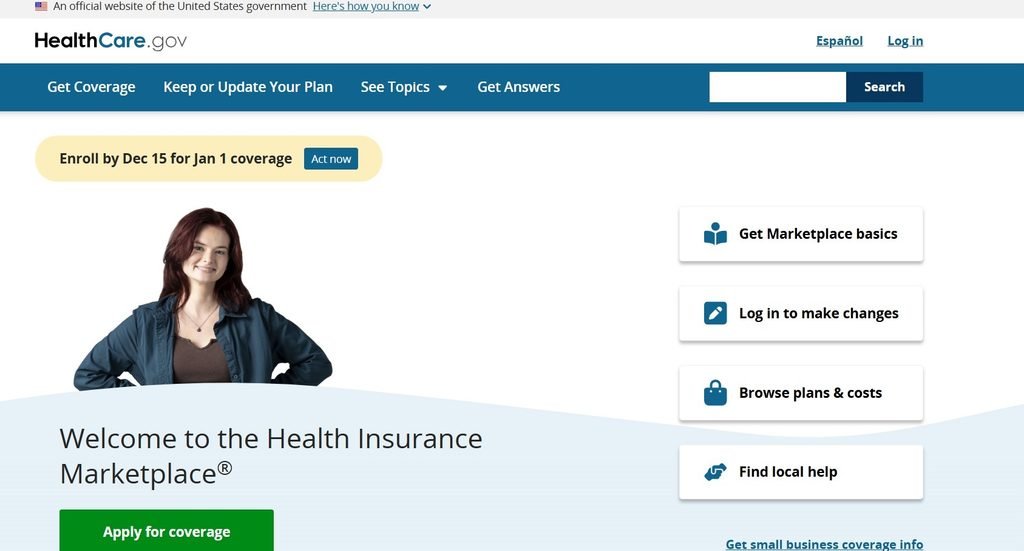
You can apply any time of year. There are two routes:
Steps:
- Find your state’s program name, since it often isn’t “Medicaid.”
- Gather proof of identity, residency, household income and, where relevant, immigration status.
- Check your likely eligibility with the screening tool at HealthCare.gov/lower-costs.
- Submit online, by phone (the Marketplace Call Center is 1-800-318-2596), by mail or in person, depending on your state.
- Watch for your state’s notice and respond by its deadline.
- Report income or household changes to your state, and renew on time.
Free help is available at localhelp.healthcare.gov.
If you’re denied. Your state sends a notice. In most cases it also securely sends your information to the Marketplace, which mails you a letter about applying for coverage there.
Official Sources
| Topic | Official source |
| Medicaid & CHIP eligibility, how to apply | HealthCare.gov: Medicaid & CHIP |
| How to get Medicaid or CHIP | Getting Medicaid & CHIP |
| Medicaid expansion explained | Expansion & what it means for you |
| Check if you might qualify | HealthCare.gov: Lower costs |
| Free local application help | Find local help |
| 2026 federal poverty guidelines | HHS ASPE poverty guidelines |
| Official publication of the 2026 guidelines | Federal Register, Jan. 15, 2026 |
| Work requirement rule | CMS fact sheet (CMS-2454-IFC) |
| CMS announcement of the rule | CMS press release |
| General Medicaid information | HHS: Who is eligible for Medicaid? |
| State agency contacts, benefits | Medicaid.gov |
| CHIP information | InsureKidsNow.gov |
| Primary source | HealthCare.gov: Medicaid & CHIP coverage (the 138% dollar figures are calculated from the HHS 2026 poverty guidelines) |
Frequently Asked Questions :-
What is the Medicaid income limit in 2026?
For adults in expansion states, 138% of FPL: $22,025 a year for one person and $45,540 for a family of four in the 48 states and D.C. Limits for children, pregnant women, parents and older adults differ by state.
Does Medicaid have an asset limit?
Generally not for MAGI groups (children, pregnant women, parents and expansion adults). Asset rules can apply to older adults and people with disabilities, especially for long-term care.
My state didn’t expand Medicaid. Should I still apply?
Yes. HealthCare.gov says to apply anyway, because each state has options based on income, household size, family status, disability and age.
What if my income is too high?
Your Marketplace application also shows whether you qualify for savings on a private plan. If your income is just above the Medicaid line, you may get lower premiums there.
When do Medicaid work requirements start?
No later than January 1, 2027, though some states started earlier. They apply mainly to expansion adults 19 to 64, and many people are exempt.
Did the October court ruling delay the work requirement?
No. The ruling struck part of the “medically frail” definition and gave the plaintiff states a six-month enforcement stay on that piece, but the January 1, 2027 date is unchanged.
What happens if I can’t prove I’m working?
Your state must give you notice and 30 calendar days to show you comply or are exempt. If you’re disenrolled, you can reapply at any time.
Can I get Medicaid and Marketplace coverage together?
If you qualify for Medicaid, you aren’t eligible for Marketplace savings. If you want to keep both, tell your state agency first and weigh the trade-offs.
Is my child eligible if I’m not?
Possibly. Children have higher limits than adults in every state, and CHIP covers children whose families earn too much for Medicaid.
Can I apply at any time?
Yes. There’s no fixed enrollment window for Medicaid or CHIP.
Where do I report changes?
Through your state Medicaid agency’s portal or phone line.

7 thoughts on “Medicaid Eligibility 2026: Income Limits and How to Apply?”